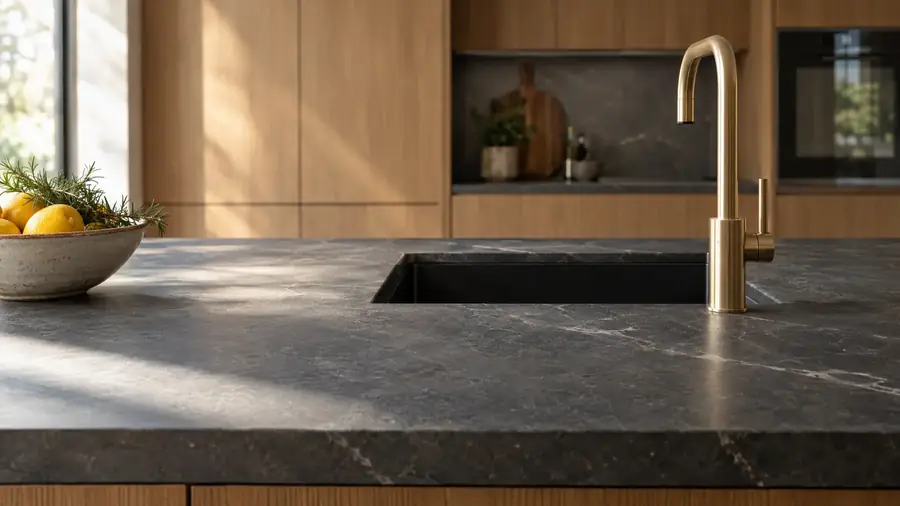
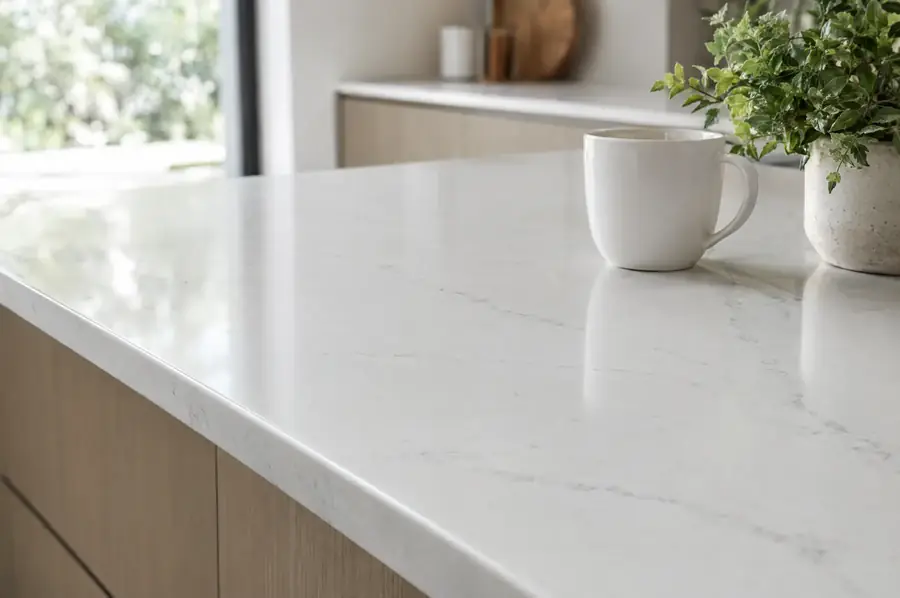
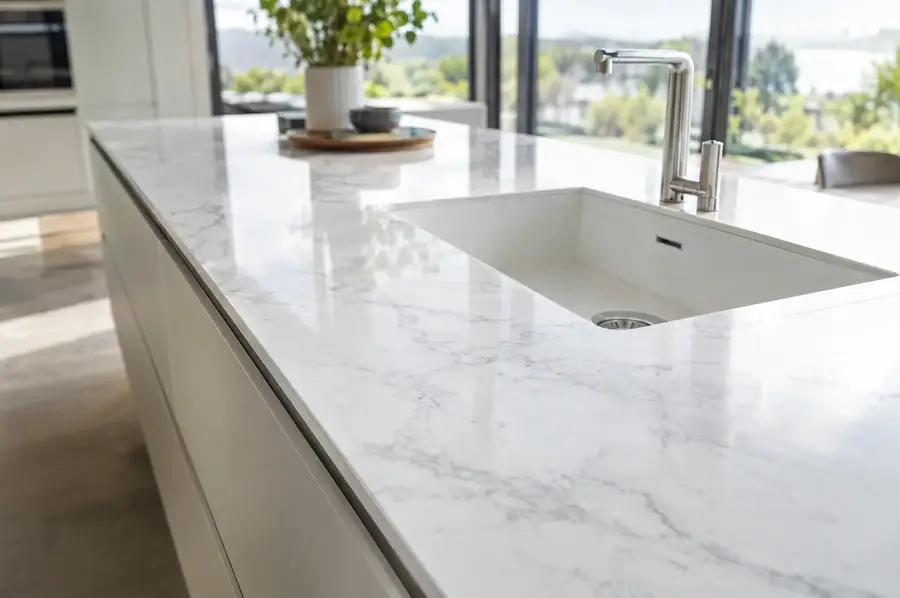
Resists heat and scratches
It is one of the hardest kitchen surfaces and is not marked by normal use of knives and pans.
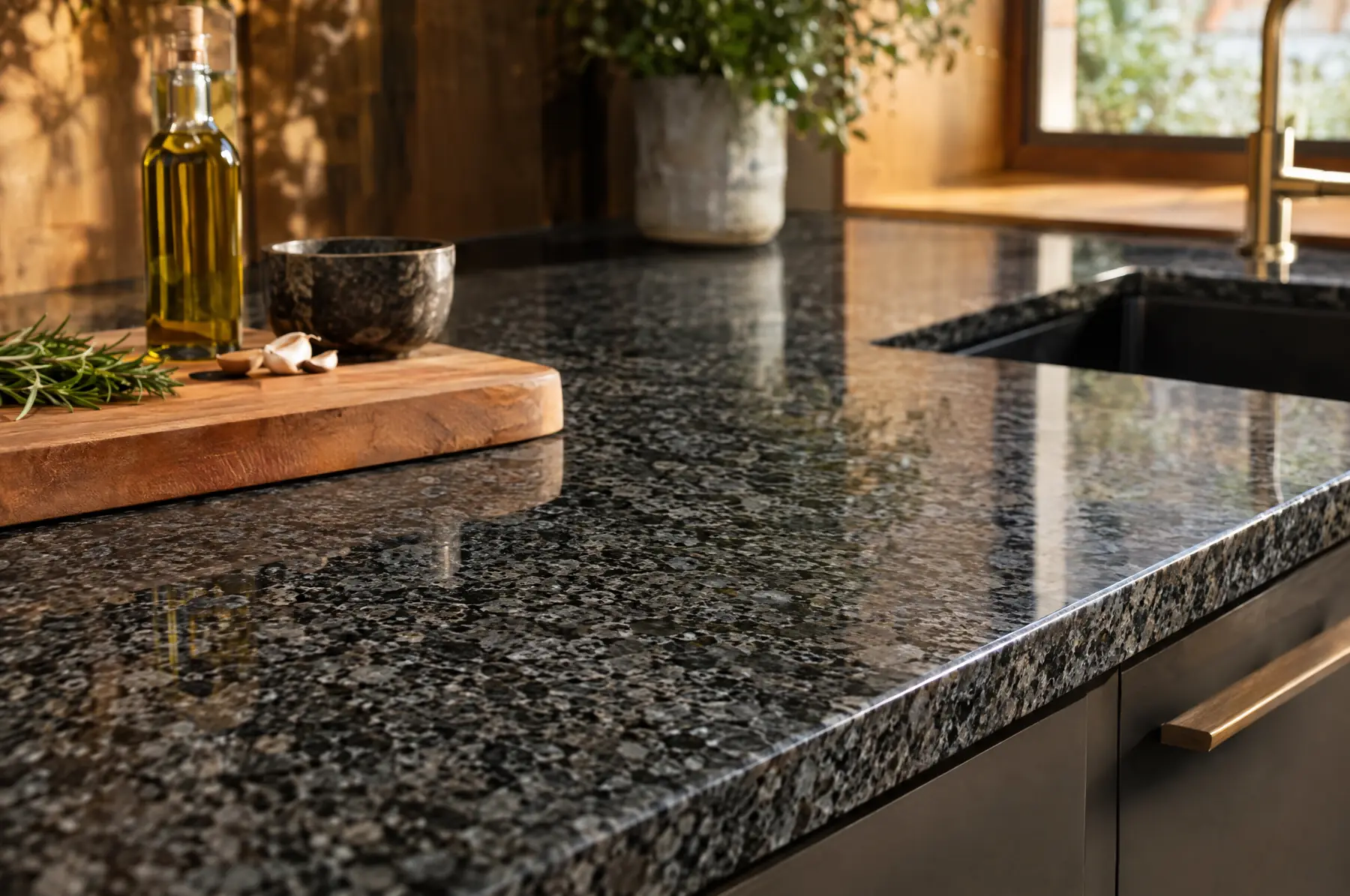
A granite worktop is very hard natural stone: it stands up well to heat, scratches and the passing years. The trade-off is a slight porosity that means sealing it from time to time, and every slab is unique, so it is worth choosing the actual piece before it is cut.
It is one of the hardest kitchen surfaces and is not marked by normal use of knives and pans.
The pattern and colour change from one slab to the next, even within the same variety.
The stone does not yellow in the sun; if the slab comes resin-treated from the factory, check that the treatment is suitable for outdoor use.
A granite worktop is the classic natural stone option and still makes sense in Tenerife, both in traditional houses in the north and in outdoor kitchens. Granite is a rock made up of quartz, feldspar and mica crystals, very hard and stable, which is cut into blocks and polished into slabs. No two are alike, and that sets it apart from the other kitchen worktops we work with.
Granite stands up very well to heat, scratches and everyday knocks, and the stone itself contains no resins that break down in the sun. You can put down a hot pan without the risk you run with quartz, although with sudden temperature changes in a small area it is always wiser to use a trivet. Its weak point is porosity: the stone absorbs some liquid, more or less depending on the variety. Light granites tend to be more porous than dark ones, although there are exceptions. On top of that, many slabs leave the factory with a surface resin treatment that fills hairline cracks: indoors it makes no difference, but for a worktop in the sun it is worth asking whether that resin is UV-stable.
A granite worktop needs sealing with an impregnating sealer for natural stone when it is fitted and then every so often, depending on the variety and how much it is used. To find out when it is due, leave a few drops of water near the sink: if the stone darkens within a few minutes, the sealer has worn off. Day to day, water and mild soap are all you need. Avoid neat bleach and acidic cleaners, which gradually wear away the protection.
In homes near the sea, salt air and humidity call for checking the seal more often, especially if the worktop is on a terrace or next to a window that is opened a lot.
There are granites for almost any kitchen, grouped into three broad families:
Besides the colour, the finish also changes. Polished brings out shine and depth of colour; honed or matt is more understated; textured finishes, such as leathered, hide wear better and are a good option outdoors.
Because every piece is unique, the right thing to do is to see the actual slab, or a photo of it, before cutting, rather than deciding from a small sample alone. Slabs come in a limited length, so L-shaped kitchens or long runs will have a joint; we position the pieces so the pattern flows and the join sits away from the sink. Granite is usually worked in 20 and 30 mm and takes an undermount sink and square edges with an eased arris, rounded edges or mitred edges.
If you want the look of natural stone and do not mind sealing it now and then, granite is a durable choice. If you would rather have nothing to maintain, Silestone quartz or stone-effect porcelain give you a non-porous surface. For a barbecue or a kitchen on the terrace, granite does stand up to the sun; check the key points for outdoor kitchens. Our comparison of worktop materials sets out the differences point by point.
A granite worktop is normally priced per linear metre, and the price depends on the variety, thickness, finish, edges and the hob and sink cut-outs.
Open the planner with this starting point already chosen. Then change the measurements, units and finishes, and see the drawing and an estimated price including IGIC straight away.
Rub a hidden area with a cotton pad soaked in acetone. If the pad comes away stained black, the stone has been dyed or waxed to darken it, and with use and cleaning it will lose colour unevenly. Always ask for the name of the stone and where it comes from.
Oil and red wine on poorly sealed light granites, because they get into the pores. If wiped up straight away they leave no trace; if left for hours, they may need a stain-drawing poultice made for stone. Lemon and vinegar do not etch granite the way they do marble, but they do wear away the sealer.
Yes. Dull granite or granite with fine marks can be repolished in the kitchen itself with diamond abrasives and then resealed, and it comes back looking very close to new. It is a job for a stonemason that uses water and raises some dust, so units and appliances need protecting.
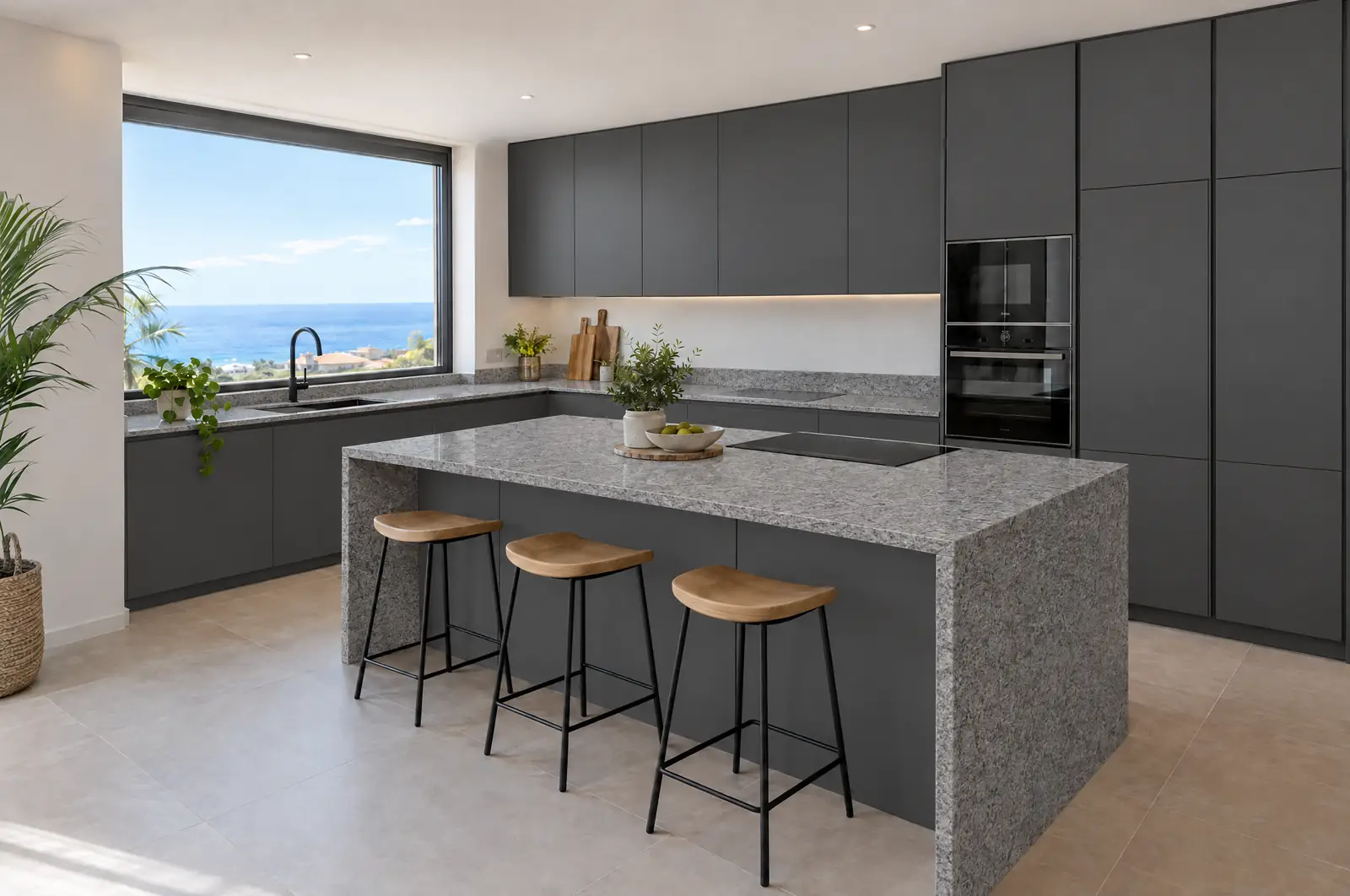
See how it would look and what it would cost in the kitchen planner, or ask us to visit and measure your home.
We will reply with a proposed visit and a first price range. If you prefer to talk, message us on WhatsApp.
Your privacy
We use technical cookies so the website works and, only if you accept them, Google Analytics cookies to understand how it is used and improve it. We do not use advertising cookies. Cookie policy