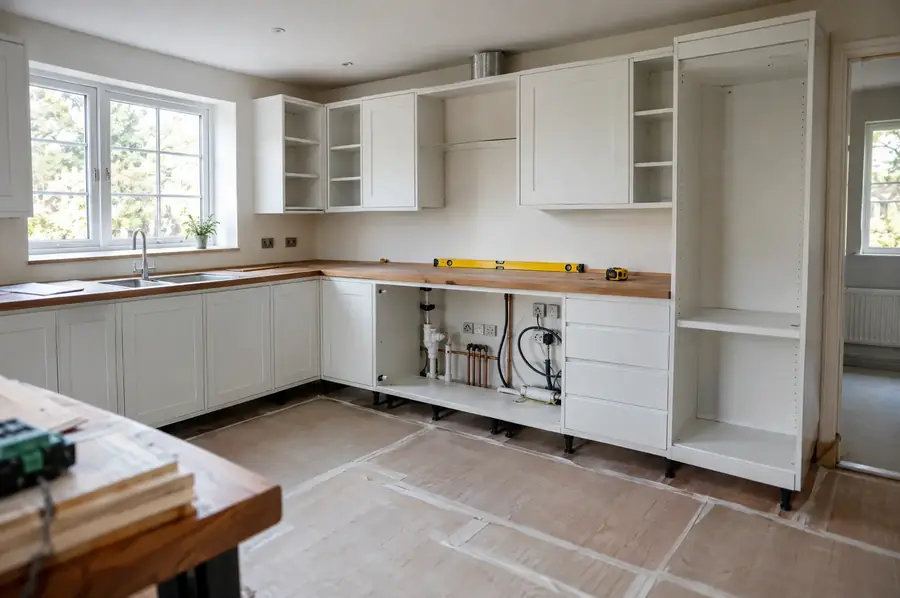
No building work or strip-out
The carcasses, sink and appliances stay where they are. The kitchen remains usable almost the whole time.
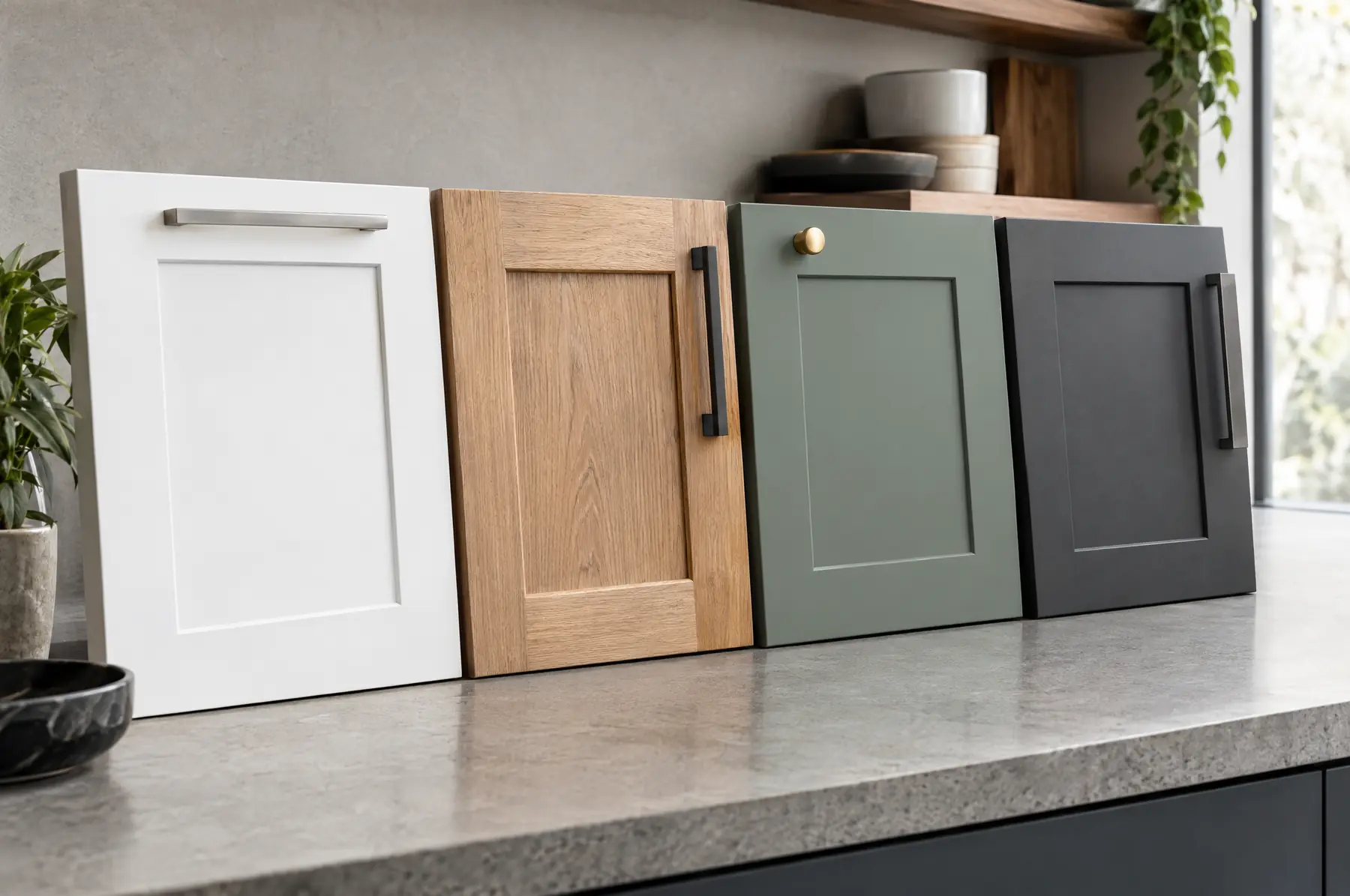
Replacing your kitchen doors pays off when the units are sound inside and the layout works for you, but the look has dated. You swap the doors, handles and, if you like, the worktop and lighting, without taking the kitchen out or doing building work.
The carcasses, sink and appliances stay where they are. The kitchen remains usable almost the whole time.
We make sure the units will last more years of use. If a carcass is swollen or loose, we tell you before quoting.
Every door and drawer front is measured on your kitchen, because the openings in older units rarely match catalogue sizes.
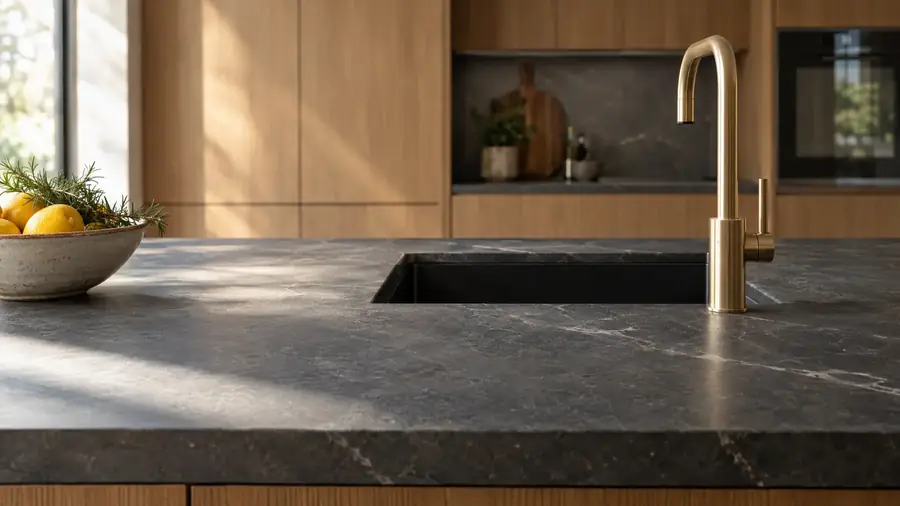
Handles, worktop, plinths and under-cabinet lighting make a big difference to the result with little extra work.
Replacement kitchen doors are the way to refresh the look without going through a full renovation. If your kitchen has a layout that works and the units are solid, swapping the doors, the handles and a few other details gives it a new look for a fraction of the cost of a new kitchen, and without weeks of your home being turned upside down.
It is worth it when the problem is cosmetic rather than structural. If you like the way the kitchen is organised, you have enough space and the units do not move and have not been damaged by water, replacing the fronts solves what bothers you.
It does not pay off in these cases:
In those situations you are putting new doors on a base that is going to fail, and the saving does not last long.
Everything you can see can be changed without changing what holds it up. The usual approach is to combine several of these:
The carcass is the box of the unit, and its condition decides whether replacing the doors makes sense. Before quoting, we check the sides and bases, especially under the sink, for swelling or damp marks. In coastal homes, and in the north of the island because of the humidity in the air, this point gets a closer look.
The hinges are the second check. If they are rusty or loose, or the hole in the carcass has worn wider, the new doors will not close properly. Replacing them at the same time as the fronts is usually the sensible option.
The finish is chosen according to how the kitchen is used and the look you are after. These are the most common:
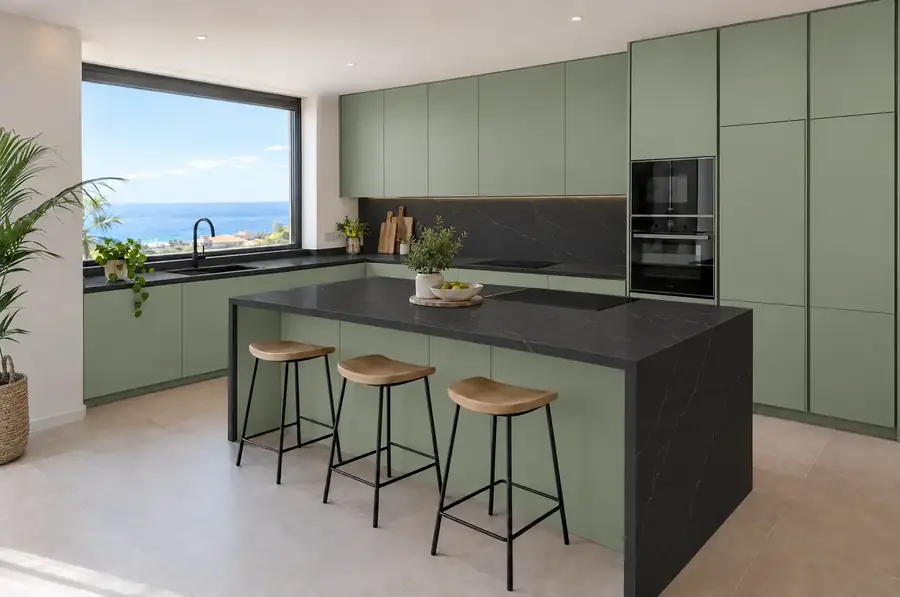
If you are unsure about colour, our guide to kitchen cabinet colours helps you combine fronts, worktop and floor. For the quote, we measure every front in your home, because the number of doors and drawers is what weighs most on the price.
Yes, with two solutions that do not involve altering the unit: a finger pull machined into the front itself, or push-to-open, which only needs the mechanism adding. A gola profile is a different matter, because it is recessed into the carcass, and in a kitchen that is already installed it usually means making the units again.
Yes, if the carcasses are in good condition. Flat-pack units come in catalogue sizes, so the new fronts are ordered to those sizes and drilled for the hinges the unit takes. It is worth checking the unit under the sink first, as in flat-pack kitchens it is usually the first to go.
Yes, and it is one way of combining two colours, for example dark base units and light wall units to bring in more light. The new finish should go with the base units that stay and with the worktop.
There is no need, because the usual approach is to replace all the visible fronts at once so there are no differences in shade between old and new doors. If you only replace part, such as the wall units, a contrasting colour is chosen on purpose rather than trying to match the old one.
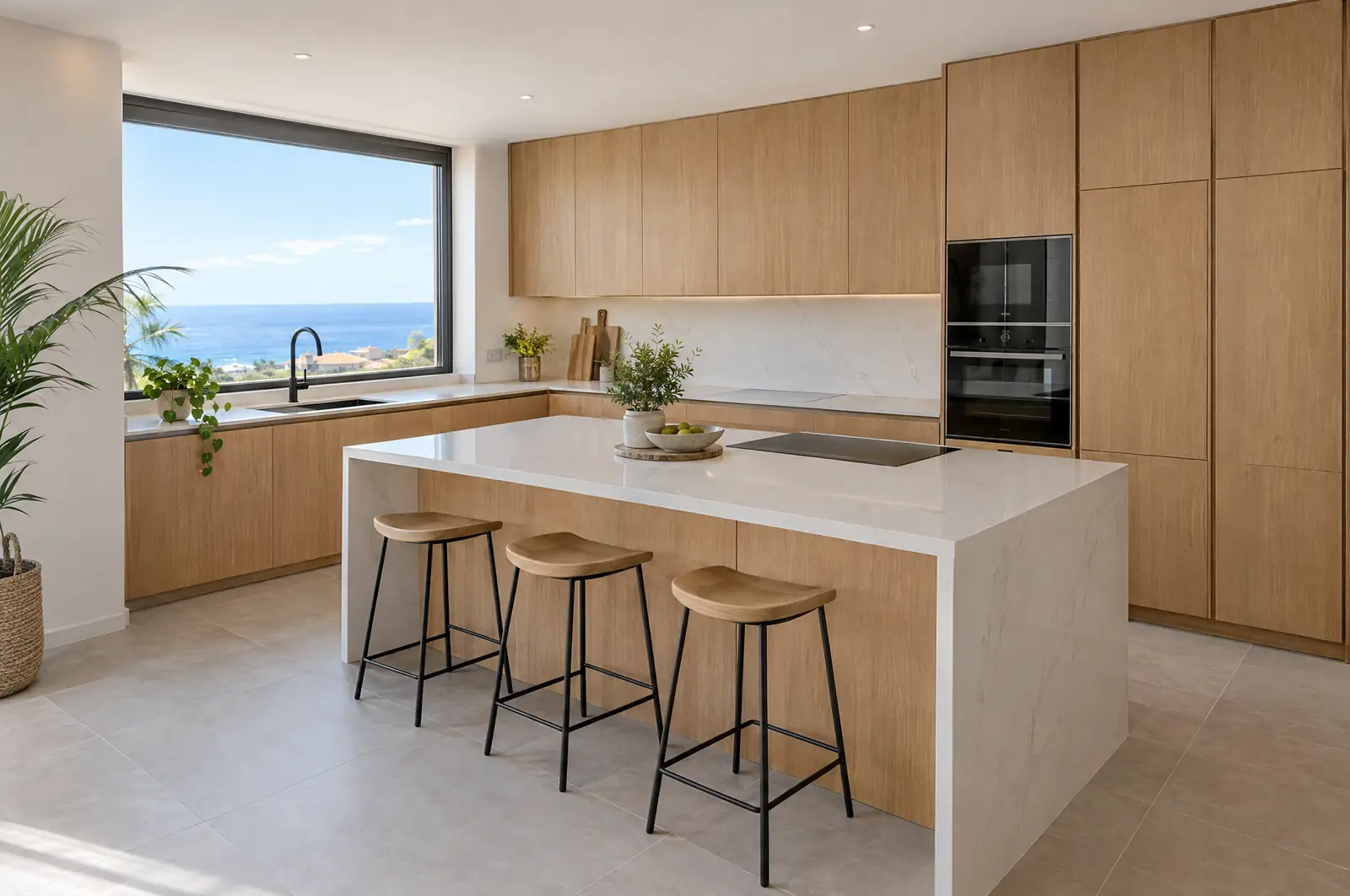
See how it would look and what it would cost in the kitchen planner, or ask us to visit and measure your home.
We will reply with a proposed visit and a first price range. If you prefer to talk, message us on WhatsApp.
Your privacy
We use technical cookies so the website works and, only if you accept them, Google Analytics cookies to understand how it is used and improve it. We do not use advertising cookies. Cookie policy