Material chosen for real use
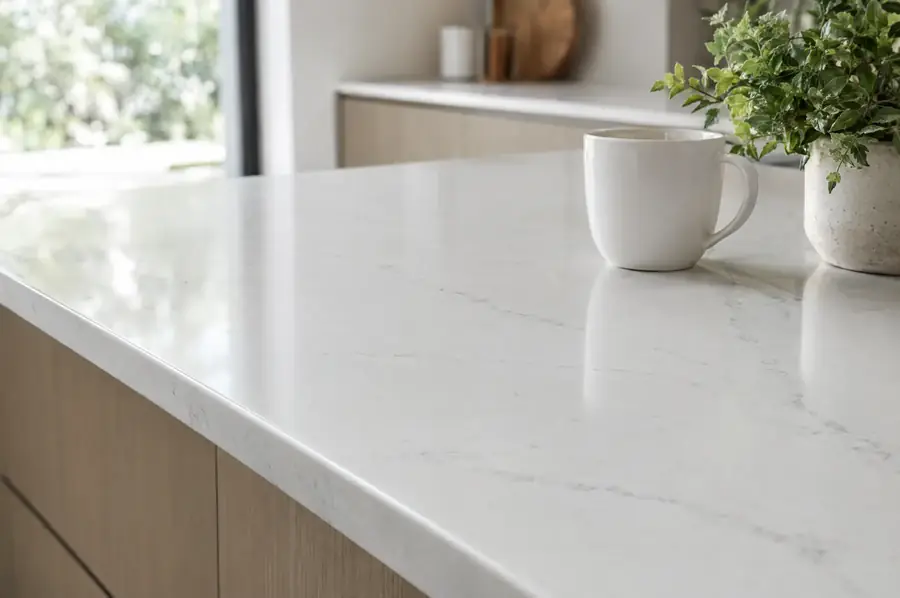
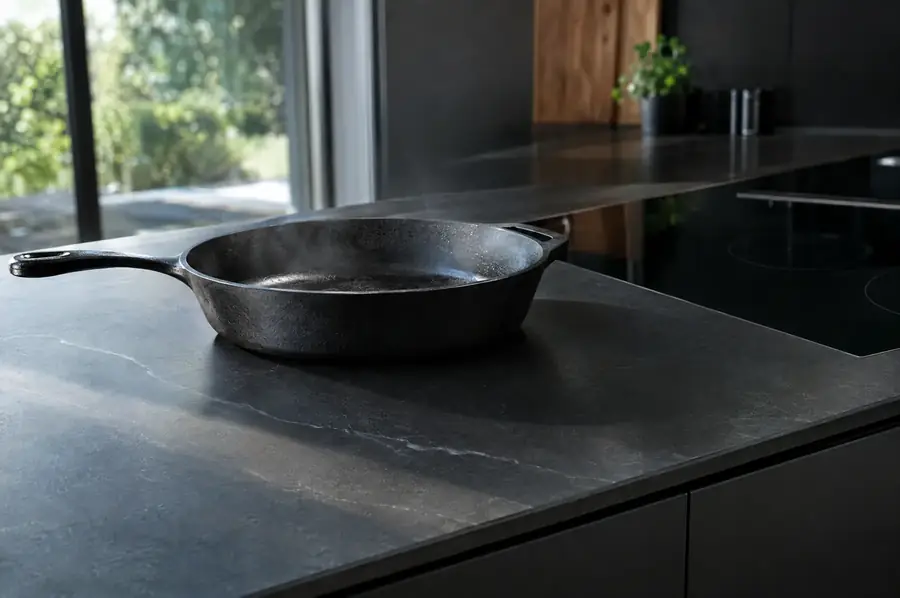
We choose the material based on how you cook, how much sun comes through the window and whether the home is on the coast, rather than on the colour alone.
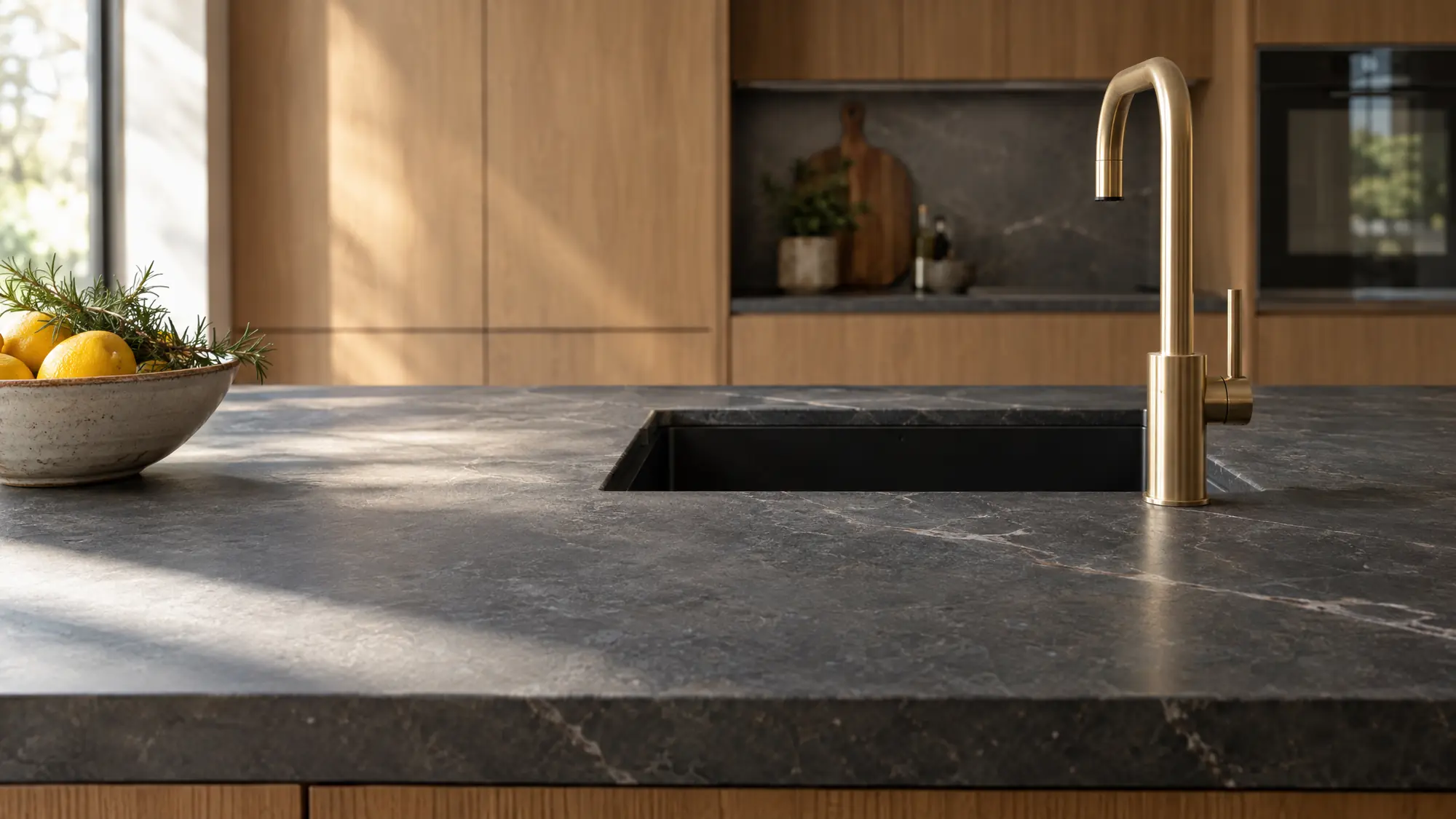
We make and fit kitchen worktops in Tenerife in laminate, quartz, granite, sintered stone and porcelain. For an indoor kitchen, quartz and granite cover most situations; if the worktop gets direct sun, you live by the sea or the kitchen is outdoors, sintered stone and porcelain perform best.
We choose the material based on how you cook, how much sun comes through the window and whether the home is on the coast, rather than on the colour alone.
We can clad the wall between the worktop and the wall units in the same material, so there are no tile joints to clean.
The worktop is templated with the base units already fitted and levelled, so the hob and sink cut-outs fit to the millimetre.
Ask for the price per linear metre with edges, cut-outs and splashback itemised: that way you compare materials and quotes without extras slipping in.
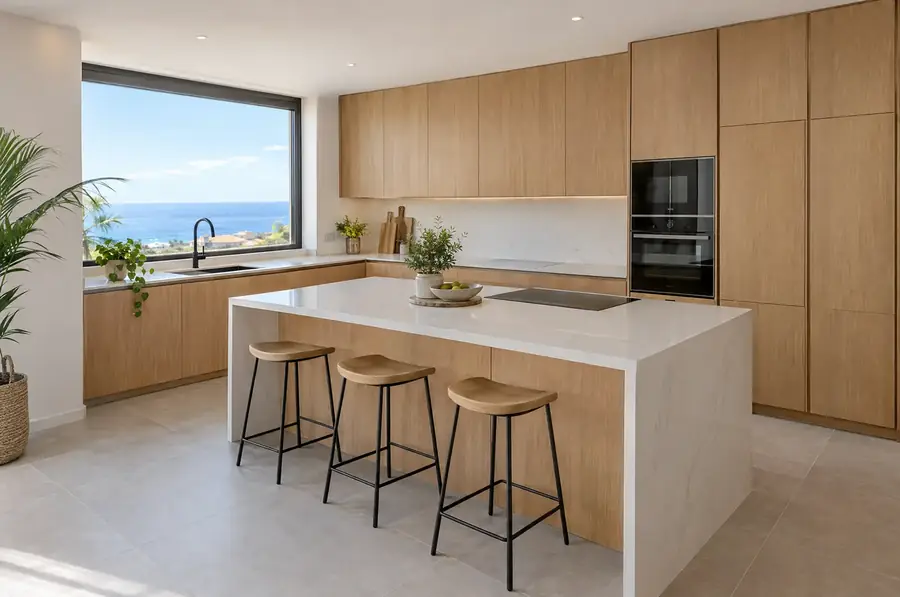
The kitchen worktops we make in Tenerife are cut to measure for each kitchen and fitted once the units are in place. The choice of material depends on three things: how much you cook, how much sunlight the worktop gets and whether the house is near the sea, where salt air and humidity take a heavier toll on edges, joints and hardware.
For most indoor kitchens, quartz or granite is the balanced choice; for kitchens with direct sun or outdoor kitchens, sintered stone or porcelain. Laminate is for tight budgets or kitchens that see light use. This table sums up how each one behaves in normal conditions; the details vary by model and manufacturer.
| Material | Direct heat | Scratching | Sun and outdoor use | Maintenance |
|---|---|---|---|---|
| Laminate | No | Vulnerable | No | Keep water off edges and joints |
| Quartz | With a trivet | Very resistant | Not recommended | Water and mild soap |
| Granite | Good | Very resistant | Yes, depending on the stone | Regular resealing |
| Sintered stone | Very good | Very resistant | Yes | Water and mild soap |
| Porcelain | Very good | Very resistant | Yes | Water and mild soap |
If you are torn between two, there is a more detailed comparison in our guide to choosing between Silestone, Dekton, granite and porcelain. And if you have a terrace with a barbecue in mind, first read what matters for outdoor kitchens.
A laminate worktop is the most affordable option and makes sense in kitchens with light use or a tight budget, as long as you keep water away from edges and joints. It is a chipboard core, ideally moisture-resistant, covered with a high-pressure decorative layer that imitates wood, stone or plain colours.
Its advantages are price, the range of finishes and its low weight, so the units do not need reinforcing. Its limits are just as clear: you cannot put a hot pan straight on it, a knife will scratch it and, if water gets in through a badly sealed edge or the sink cut-out, the core swells and cannot be repaired. That is why standard laminate takes an inset sink sitting on top of the worktop.
There is a tougher version, compact laminate: a solid sheet of about 12 mm with no board core, which copes with water and allows an undermount sink. It costs more than board-backed laminate and, depending on the finish, can come close to the price of an entry-level quartz, so it is worth comparing them in the same quote.
A matching splashback means taking the same material up the wall, between the worktop and the wall units. It looks seamless, has no tile joints for grease to build up in and wipes clean with a cloth. Porcelain and sintered stone are made in thin thicknesses designed for cladding; with quartz and granite a thinner slab than the worktop is normally used. Behind a gas hob, check the minimum distance required by the material’s manufacturer, because not all of them tolerate the heat of a nearby flame equally well.
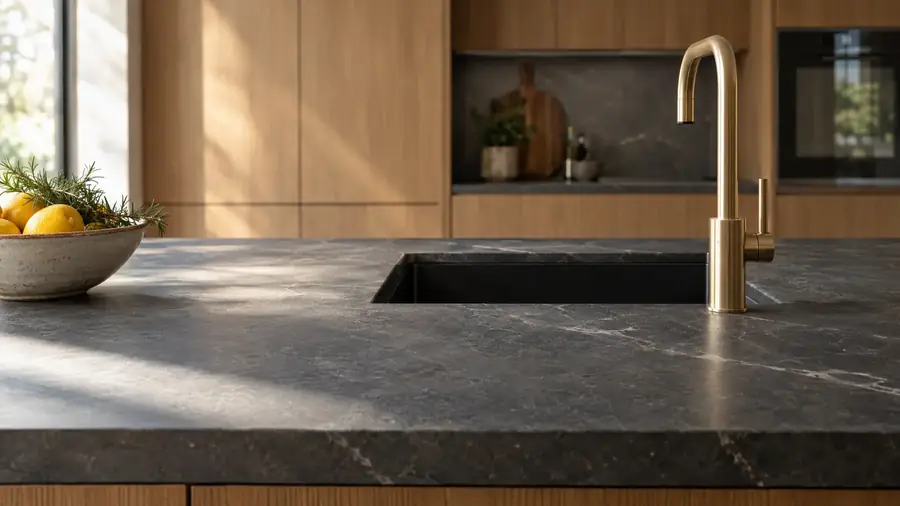
An undermount sink is fixed from below and leaves the surface flush: you can wipe crumbs straight into the bowl. It needs a material that will not deteriorate with water on the edge of the cut-out, so it works with quartz, granite, sintered stone, porcelain and compact laminate, but not with standard board-backed laminate. An inset sink sits on top with a rim; it is cheaper, easier to replace in the future and the logical choice with laminate. In stone, drainer grooves can also be cut next to the bowl.
A standard kitchen worktop is 60 to 64 cm deep, between 12 and 40 mm thick depending on the material, and sits about 90 cm off the floor. The length is not fixed: it is whatever each wall measures, and it is adjusted to the millimetre once the units are fitted.
The most practical edge is a square edge with a small arris, while a rounded or mitred edge is chosen for use and looks. On 12 mm ultra-compact materials, the edge is the most vulnerable area when knocked, so its profile matters more than with stone.
A worktop is normally priced per linear metre, and the price depends on the material, the colour group, the thickness, the edge type, the hob and sink cut-outs, the splashback and the shipping of the slabs, which come over from mainland Spain. That is why we do not give a fixed figure without measuring. You can get an idea of the whole kitchen with the price calculator and, if you want to see the material before deciding, compare Silestone quartz with Dekton.
In properties with a high turnover of guests, sintered stone and quartz in mid tones work well, because they hide marks and need no sealing. We would avoid laminate if there will be a lot of cooking, and very bright whites if nobody is going to clean every day.
It is not compulsory, but it is the most practical choice if the wall is painted or has old tiles. An upstand is a strip of the same material, a few centimetres high, fixed along the join with the wall to stop water and grease getting in behind. If you clad the wall with a matching splashback, you do not need one.
It is rarely worth it. The piece is cut for the old layout, with its hob and sink cut-outs, and stone can crack when it is taken out. It only makes sense if the new kitchen repeats the measurements exactly and the worktop comes out in one piece.
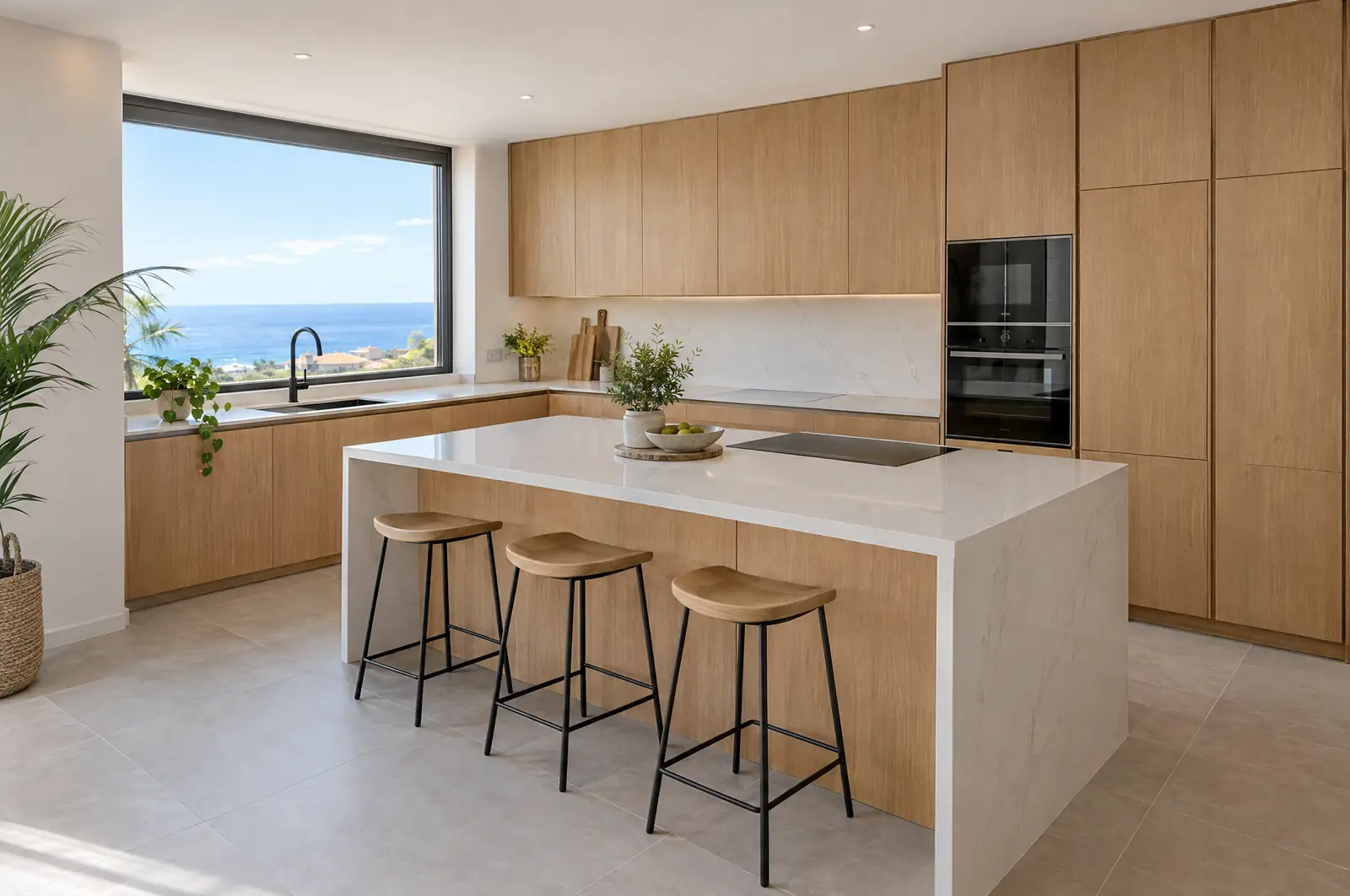
See how it would look and what it would cost in the kitchen planner, or ask us to visit and measure your home.
We will reply with a proposed visit and a first price range. If you prefer to talk, message us on WhatsApp.
Your privacy
We use technical cookies so the website works and, only if you accept them, Google Analytics cookies to understand how it is used and improve it. We do not use advertising cookies. Cookie policy