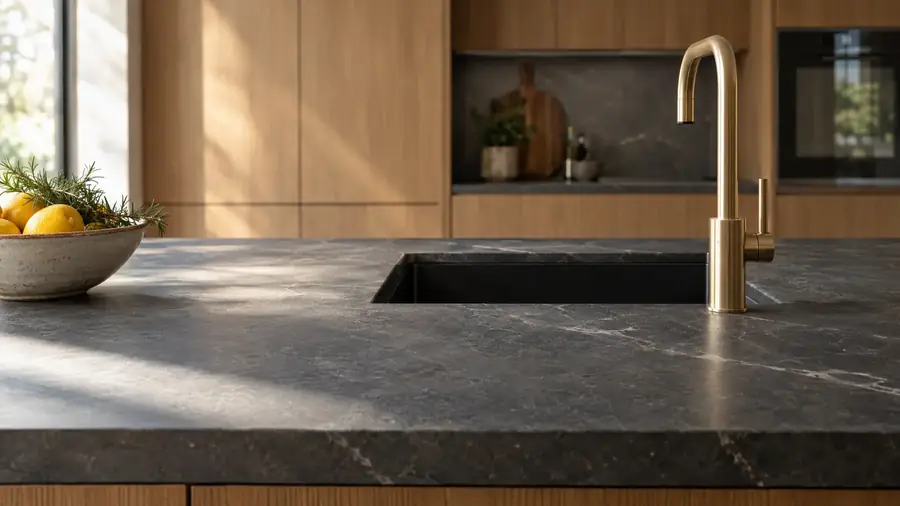
No pores, no sealing
Wine, oil and coffee do not soak in if wiped up in time, and there is no need to apply sealers as with natural stone.
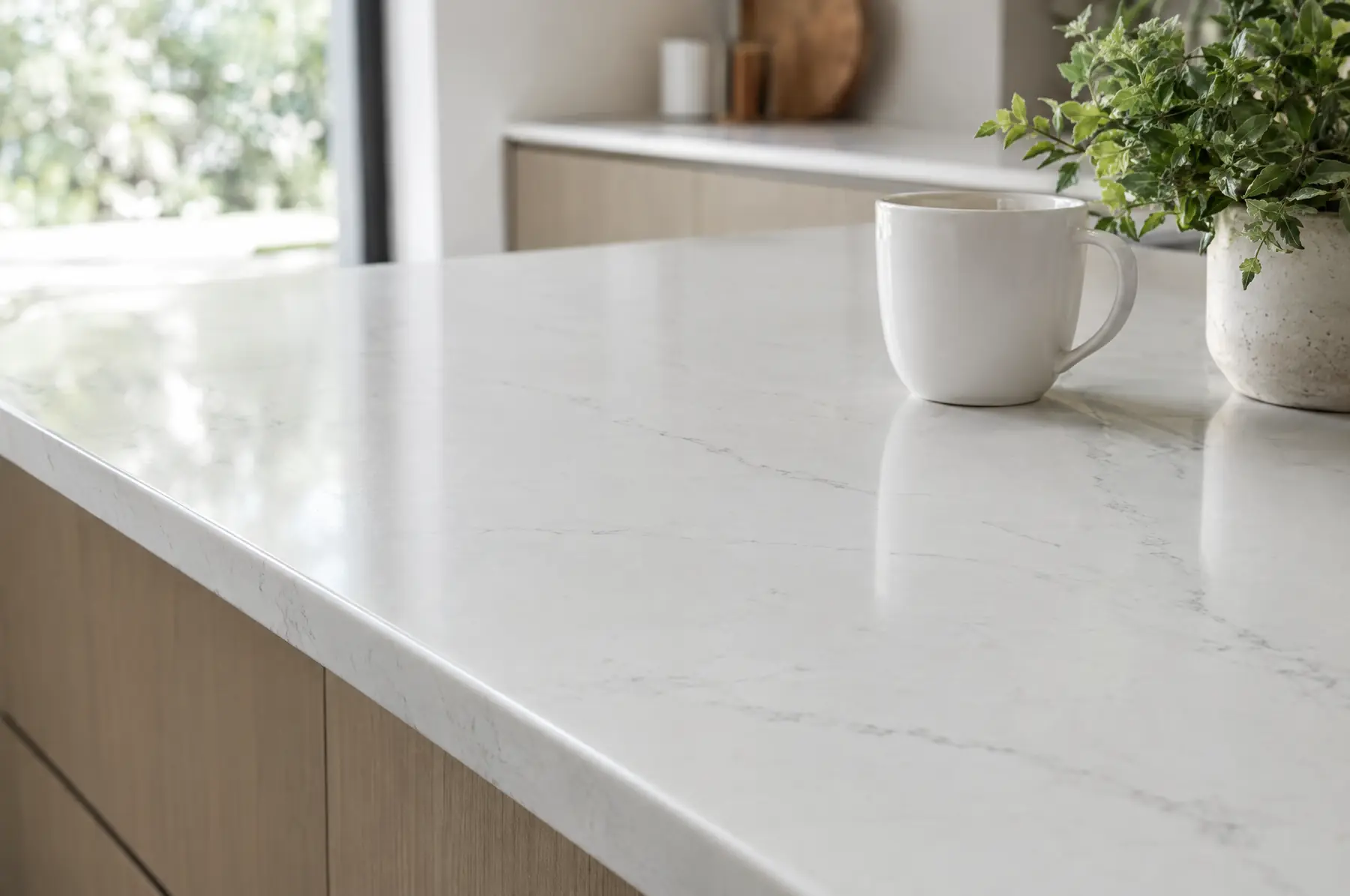
A Silestone worktop is a quartz surface made by Cosentino, which now describes it as a hybrid mineral surface: it resists scratches and stains very well and needs no sealing. On the other hand, you cannot put hot pans straight on it and it is not designed for outdoor use, because the sun eventually alters the colour.
Wine, oil and coffee do not soak in if wiped up in time, and there is no need to apply sealers as with natural stone.
Whites, creams, greys, marble effect and concrete effect, in polished, matt or textured finishes.
It takes an undermount sink, and there are also sinks in the same material with no visible joints.
A Silestone worktop works particularly well in Tenerife flats and houses where the kitchen is indoors. It started out as engineered quartz and today combines minerals, recycled materials and resins pressed into slabs. That composition explains both its strengths and its limits compared with the other worktop materials we work with.
Silestone is Cosentino’s brand of engineered quartz, a non-porous surface made from minerals and resins. Since 2020 the manufacturer has reformulated it with its HybriQ+ technology, which includes at least 20% recycled materials and limits crystalline silica: according to Cosentino, no colour exceeds 40% and the XM range stays at or below 10%. The exact composition varies by series and colour. What matters to you as a user is that it does not absorb liquids, stands up very well to everyday scratches and keeps an even colour across the whole slab.
The Silestone colour range is wide and changes often, so the best approach is to see samples in your hand and in the light of your own kitchen. It is grouped into families:
The finishes are polished (gloss), matt and textured. Matt feels lovely to the touch, but in dark colours it shows fingerprints and limescale marks more, something to bear in mind if the water in your home is very hard.
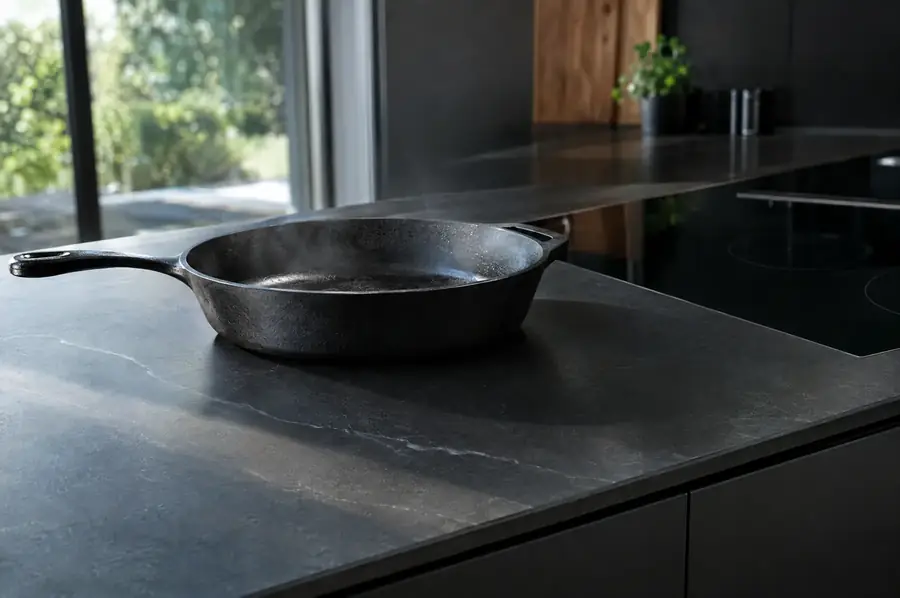
Quartz does not cope well with intense direct heat: putting down a pan straight off the hob can leave a mark or, through thermal shock, a crack. The manufacturer recommends always using a trivet. Nor should it be fitted right up against gas burners without keeping to the distance Cosentino specifies. Water and mild soap are all you need to clean it; avoid strippers, caustic soda and highly alkaline products, which attack the resins.
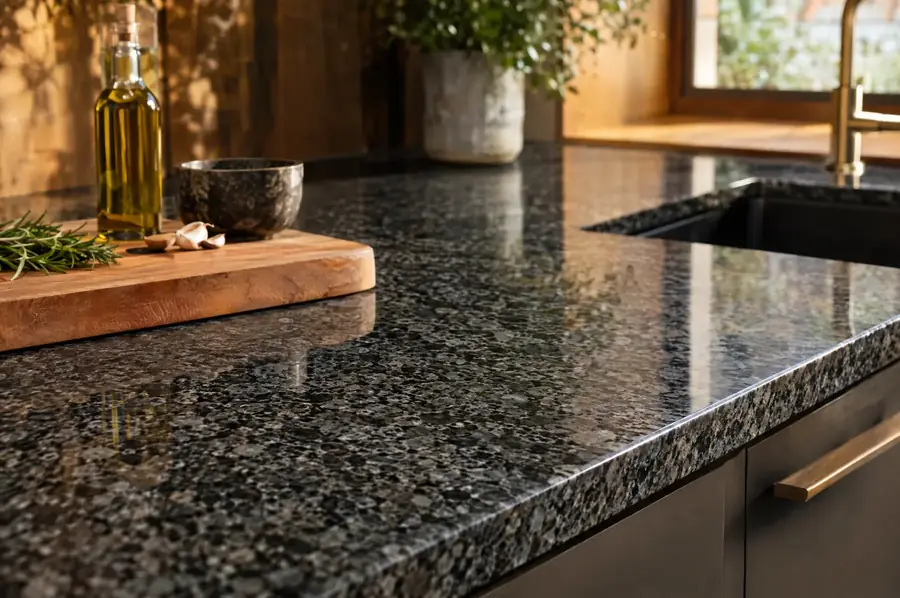
If heat is your priority because you cook a lot over high heat, compare it with an ultra-compact surface such as Dekton or with a granite worktop.
Silestone is not recommended for outdoor use because ultraviolet light breaks down the resins and, over time, the colour yellows or loses intensity. In the south of Tenerife, a terrace in the sun almost all year speeds up that process. Something similar can happen, to a lesser extent, to an indoor worktop next to an unprotected window that gets many hours of direct sun. For a barbecue or a terrace, look at the options for outdoor kitchens, where sintered stone or porcelain are used.
Silestone is made in 12, 20 and 30 mm. 20 mm is the standard for worktops; 12 mm is used for matching splashbacks and cladding, and 30 mm on islands where you want a substantial edge. The edges can be square with an eased arris, rounded or mitred to add visual thickness. It is ideal with an undermount sink, because the edge of the cut-out is not affected by water, and Cosentino offers sinks in the same material.
A Silestone worktop is normally priced per linear metre, and the price depends above all on the colour group: plain whites tend to be in the more affordable groups and marble effects in the highest. Thickness, edges, cut-outs and splashback also play a part. If you are comparing materials, our comparison of Silestone, Dekton, granite and porcelain helps you decide before asking for a quote.
Open the planner with this starting point already chosen. Then change the measurements, units and finishes, and see the drawing and an estimated price including IGIC straight away.
Yes. Engineered quartz, also called quartz composite, is made by several companies and behaves in a similar way in daily use. Colours, ranges, composition, the manufacturer's warranty and price vary between brands, so compare the technical data sheets as well as the samples.
Mid tones with some veining or grain, such as greys and beiges, are the most forgiving. Plain whites show coffee or tomato stains sooner if they are not wiped up, and matt blacks show fingerprints and limescale from the water.
Yes, indoors it works just as well for bathroom vanity tops, tables and breakfast bars. The same limits apply in every case: no intense direct heat and no prolonged exposure to the sun.
A small chip on the edge can be filled with resin filler matched to the worktop colour, and the repair is fairly well disguised. A crack running right through the piece cannot be repaired well and usually means replacing that section.
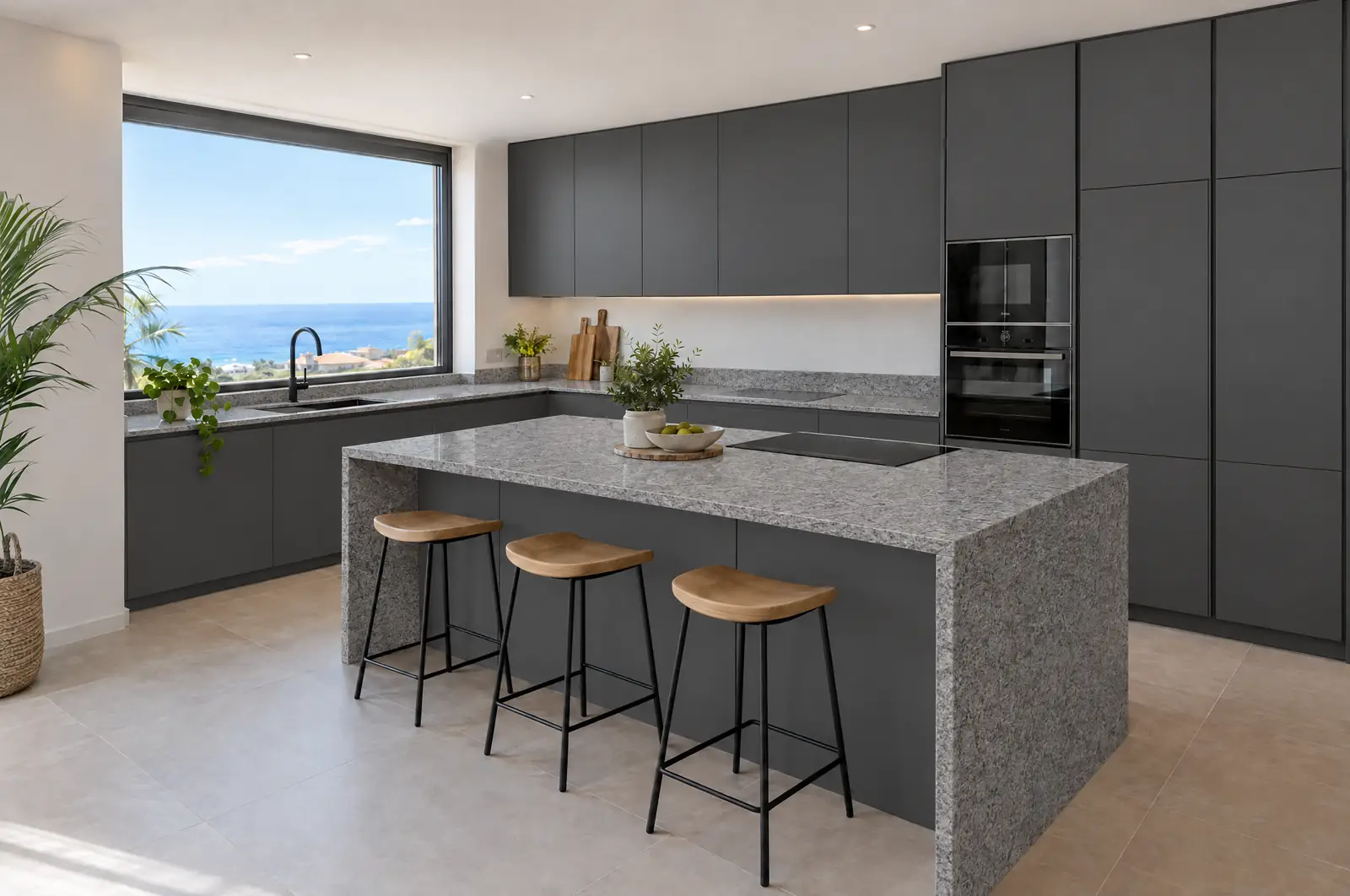
See how it would look and what it would cost in the kitchen planner, or ask us to visit and measure your home.
We will reply with a proposed visit and a first price range. If you prefer to talk, message us on WhatsApp.
Your privacy
We use technical cookies so the website works and, only if you accept them, Google Analytics cookies to understand how it is used and improve it. We do not use advertising cookies. Cookie policy